Close
All Categories
    Filters
    Preferences
    Search

    Cube ID

    "Cube ID" typically refers to the CubePilot Cube ID is a specialized hardware module designed to provide Remote Identification (Remote ID) for drones, ensuring compliance with aviation regulations like those from the FAA (Federal Aviation Administration)

    MFR Part #: HX4-06252
    $44.00
    Key Features and Functions
    • Remote ID Compliance: It broadcasts essential in-flight information, such as the drone's unique identification number, aircraft type, and real-time position.
    • Dual-Protocol Support: Available in two main versions to suit different drone architectures:
      • CAN Version: Connects via the DroneCAN protocol, often used for professional-grade systems.
      • Serial Version: Uses a standard serial connection for more general compatibility.
    • Hardware Design: The module is ultra-lightweight and tiny (approx. 25mm x 13.75mm), making it suitable for even small drones where space and power consumption are critical.
    • Broadcasting: It utilizes Bluetooth 5.2 to transmit data, allowing identification by receiver apps or authorized monitoring equipment. 
    Integration and Configuration
    • ArduPilot Ecosystem: Designed to work seamlessly with the CubePilot range of flight controllers (e.g., Cube Orange+).
    • Firmware Requirements: Effective use typically requires specific ArduPilot firmware (v4.4 or later) to enable "persistent storage" for the unique drone ID.
    • Setup: Configuration is often performed through Mission Planner, where users must set specific parameters (like DID_ENABLE) to activate the broadcast. 

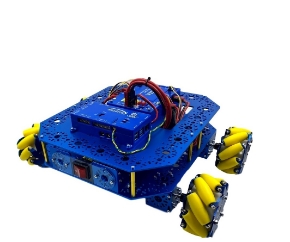
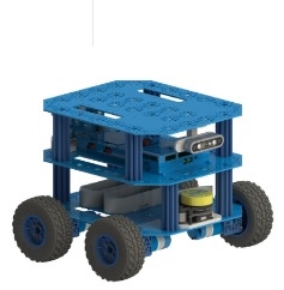
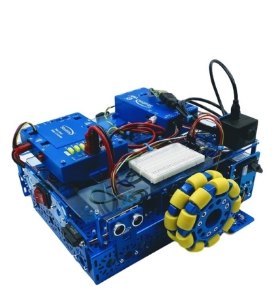
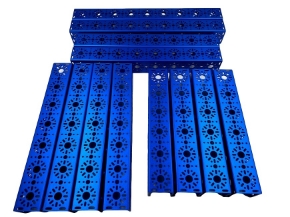
    STEM BOT Pro Kit - Parts List

    (Download to View STEM BOT Parts List as PDF)

    Note: 3D CAD files for all parts are available at www.studica.com/studica-robotics-resources

    Controllers included in the STEM BOT Pro Kit:

    • VMX Robotics Controller 
      • The Studica Robotics VMX Robotics Controller can be used an a Robot Control System or Vision/Motion processor, supporting Java and C++.  The controller integrates the navX-IMU, Gigabit Ethernet, USB3.0 ports and built-in Wifi and Bluetooth.
      • Highly-integrated, inexpensive, WiFi-enabled, multi-core Linux computing platform with lots of USB IO for expansion.
      • 32-bit ARM Microcontroller incorporating sophisticated I/O and digital communications engines
      • Low-cost MEMs Inertial Measurement Units (IMUs)
      • Powerful software providing rich libraries and tools for developing robot control software in C++, Java
      • CAN bus for high-speed, real-time communication between devices
    • Titan Quad Motor Controller 
      • The Studica Robotics Titan Quad Motor Controller is a powerful, 4-channel CAN-based motor controller with a built-in fuse-box (for DC motors up to 20A).

    Key Features and Functions
    • Remote ID Compliance: It broadcasts essential in-flight information, such as the drone's unique identification number, aircraft type, and real-time position.
    • Dual-Protocol Support: Available in two main versions to suit different drone architectures:
      • CAN Version: Connects via the DroneCAN protocol, often used for professional-grade systems.
      • Serial Version: Uses a standard serial connection for more general compatibility.
    • Hardware Design: The module is ultra-lightweight and tiny (approx. 25mm x 13.75mm), making it suitable for even small drones where space and power consumption are critical.
    • Broadcasting: It utilizes Bluetooth 5.2 to transmit data, allowing identification by receiver apps or authorized monitoring equipment. 
    Integration and Configuration
    • ArduPilot Ecosystem: Designed to work seamlessly with the CubePilot range of flight controllers (e.g., Cube Orange+).
    • Firmware Requirements: Effective use typically requires specific ArduPilot firmware (v4.4 or later) to enable "persistent storage" for the unique drone ID.
    • Setup: Configuration is often performed through Mission Planner, where users must set specific parameters (like DID_ENABLE) to activate the broadcast. 
    EV SSL