Close
All Categories
    Filters
    Preferences
    Search

    Here4 Base without antenna

    The Here4 Base (without antenna) isa high-precision GNSS RTK base station module from CubePilot designed for use with drones and autonomous systems. It is a standalone receiver unit that requires an external antenna to function as a reference station for centimeter-level accuracy. 

    MFR Part #: HX4-06312
    $157.50
    Product Overview:
    • Core Hardware: Features the u-blox ZED-F9P chip, a professional dual-band RTK navigation module.
    • Signal Support: Supports multiple constellations including GPS, GLONASS, BeiDou, Galileo, and QZSS across L1 and L5 bands for faster lock times and better accuracy.
    • Compatibility: Fully compatible with ArduPilot and PX4 flight stacks, and integrates seamlessly with ground control stations like Mission Planner and QGroundControl.
    • Connection: Connects to a computer via USB for data and firmware updates.
    • Connectivity Port: Uses a standard SMA connector for attaching the required external L1/L5 antenna. 
    Key Specifications:
    Feature  Details
    Accuracy Horizontal: 0.01 m + 1 ppm; Vertical: 0.01 m + 1 ppm (in RTK mode)
    Weight 18g without cable; 43g with cable
    Size 40 x 41 x 11 mm
    Interface USB (for PC), SMA (for antenna)

     Usage Requirements:

    1. Antenna: Since this SKU does not include an antenna, you must purchase a compatible multi-band (L1/L5) GNSS antenna separately.
    2. Telemetry Link: To transmit RTK corrections from the base to a drone (rover), a separate pair of telemetry radios (e.g., 915MHz or 433MHz) is required.
    3. Setup: Typically configured using the "Survey-In" method in Mission Planner to establish a fixed reference point.

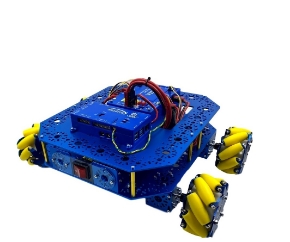
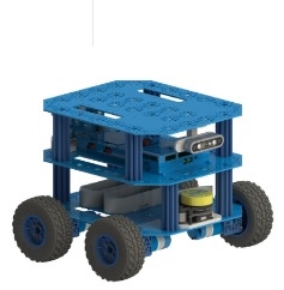
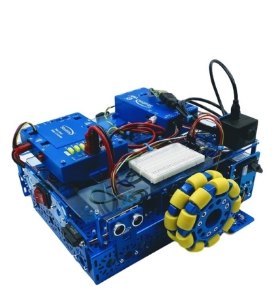
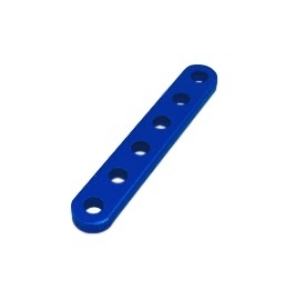
    STEM BOT Pro Kit - Parts List

    (Download to View STEM BOT Parts List as PDF)

    Note: 3D CAD files for all parts are available at www.studica.com/studica-robotics-resources

    Controllers included in the STEM BOT Pro Kit:

    • VMX Robotics Controller 
      • The Studica Robotics VMX Robotics Controller can be used an a Robot Control System or Vision/Motion processor, supporting Java and C++.  The controller integrates the navX-IMU, Gigabit Ethernet, USB3.0 ports and built-in Wifi and Bluetooth.
      • Highly-integrated, inexpensive, WiFi-enabled, multi-core Linux computing platform with lots of USB IO for expansion.
      • 32-bit ARM Microcontroller incorporating sophisticated I/O and digital communications engines
      • Low-cost MEMs Inertial Measurement Units (IMUs)
      • Powerful software providing rich libraries and tools for developing robot control software in C++, Java
      • CAN bus for high-speed, real-time communication between devices
    • Titan Quad Motor Controller 
      • The Studica Robotics Titan Quad Motor Controller is a powerful, 4-channel CAN-based motor controller with a built-in fuse-box (for DC motors up to 20A).

    Product Overview:
    • Core Hardware: Features the u-blox ZED-F9P chip, a professional dual-band RTK navigation module.
    • Signal Support: Supports multiple constellations including GPS, GLONASS, BeiDou, Galileo, and QZSS across L1 and L5 bands for faster lock times and better accuracy.
    • Compatibility: Fully compatible with ArduPilot and PX4 flight stacks, and integrates seamlessly with ground control stations like Mission Planner and QGroundControl.
    • Connection: Connects to a computer via USB for data and firmware updates.
    • Connectivity Port: Uses a standard SMA connector for attaching the required external L1/L5 antenna. 
    Key Specifications:
    Feature  Details
    Accuracy Horizontal: 0.01 m + 1 ppm; Vertical: 0.01 m + 1 ppm (in RTK mode)
    Weight 18g without cable; 43g with cable
    Size 40 x 41 x 11 mm
    Interface USB (for PC), SMA (for antenna)

     Usage Requirements:

    1. Antenna: Since this SKU does not include an antenna, you must purchase a compatible multi-band (L1/L5) GNSS antenna separately.
    2. Telemetry Link: To transmit RTK corrections from the base to a drone (rover), a separate pair of telemetry radios (e.g., 915MHz or 433MHz) is required.
    3. Setup: Typically configured using the "Survey-In" method in Mission Planner to establish a fixed reference point.
    EV SSL