



Close
All Categories
    Filters
    Preferences
    Search
    RSS

    2025, December

    0 NavX3-CAN: The Next-Generation IMU for FRC and Robotics

    Quick Summary: The NavX3-CAN robotics navigation sensor is a completely re-engineered inertial measurement unit (IMU) for FRC and competition robotics. Designed from the ground up, it features a new gyro, accelerometer, magnetometer, and CAN-FD connectivity, providing accurate sensor data, easy calibration, and improved autonomous control. Ideal for all teams, from rookies to advanced builders.

    What is an IMU and How is it Used in Robotics?
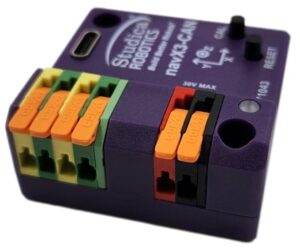
    navX3-CAN Robotics Navigation SensorAn IMU (Inertial Measurement Unit) is a sensor that tells a robot how it is moving and which way it is oriented. It combines a gyroscope, accelerometer, and magnetometer.

    A gyroscope measures how fast and in which direction the robot rotates. An accelerometer measures acceleration, how quickly the robot speeds up or slows down in any direction. A magnetometer acts like a compass to detect orientation.

    In robotics, including FRC and other competitions, IMUs help robots drive straight, turn accurately, and navigate the field. They provide real-time data for autonomous routines and precise control, helping teams improve reliability and overall performance.

    NavX3-CAN: Upgrades for FRC Teams

    NavX3-CAN is a completely redesigned competition IMU. Unlike the previous NavX2 IMU, nothing carries over from the earlier version. All hardware, firmware, and architecture are completely new from the ground up.
    Major Advantages:
    ✅  navX3-CAN Robotics Navigation SensorBrand-new IMU, magnetometer, MCU, and CAN architecture: Offers a fresh start for modern competitions.
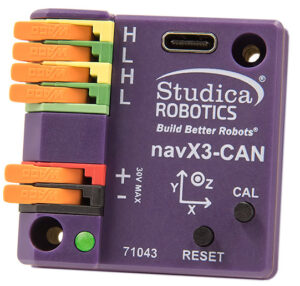
    ✅  CAN-FD connectivity: Up to eight times faster than CAN 2.0, with up to eight times more data per packet for smoother control and better logging.
    ✅  Easy Calibration:
    Mount in any position or direction, simple user app to increase accuracy.
    ✅  High-speed Output: User-selectable rates up to 1000 Hz for fast control loops.
    ✅  Durable Design: Sealed case, reverse power protection, and color-coded Wago connectors. These upgrades ensure that every team, from rookies to advanced builders, can rely on accurate sensor data without complicated setup or difficult calibrations.

    How NavX3-CAN Helps Teams Succeed

    ✅  Accuracy: Continuous per-axis bias estimation and a custom sensor fusion algorithm reduce drift and improve autonomous performance.
    ✅  Simple Calibration: Orientation-independent setup saves time during build season and competitions.
    ✅  Team-Friendly:
    Works for rookies with simple setup and reliable data, while advanced teams can push for higher autonomous precision.
    ✅  Future-Ready Systems:
    Compatible with legacy roboRIO via CAN 2.0 and ready for SystemCore updates in 2027.

    NavX3-CAN Technical Highlights


    Feature Specification
    Gyroscope ±15.625 dps to ±4000 dps, 16-bit resolution
    Accelerometer ±2 g to ±32 g, 16-bit resolution
    Magnetometer ±800 µT, 13 nT resolution
    Outputs Yaw, Pitch, Roll, 6- & 9-axis Quaternion, Linear Acceleration, Angular Velocity
    Voltage Range 5–30 VDC
    Shock Reliability 20,000 g
    Operating Temperature -20°C to +85°C
    Low Drift  No motion: ~0.0619°/hour 5 seconds after motion: ~0.0582°/min

    CAN-FD: Faster Data for Better Robot Control

    CAN-FD (Controller Area Network Flexible Data-Rate) is an upgraded communication protocol that sends more data at higher speeds than the traditional CAN 2.0 (Controller Area Network Version 2.0, the older standard used for connecting sensors and controllers in robotics and automotive systems). For FRC teams, this means your robot can get sensor readings faster and more reliably, improving responsiveness and ultimately smoother autonomous operation.

    ✅  Smoother Sensor Readings: Faster updates mean more precise and responsive control.

    ✅  Better Autonomous Performance: High-speed data improves autonomous routine accuracy.

    ✅  Seamless FRC Integration: Works with modern control systems and prepares teams for future updates.

    Frequently Asked Questions

    Who should use the NavX3-CAN?
    All FRC robotics teams can benefit from the NavX3-CAN. Rookie teams enjoy a straightforward setup and automatic calibration, while advanced teams gain precise control for complex autonomous routines.

    How is it different from the NavX2?
    The NavX3-CAN is a complete redesign. All hardware, firmware, and architecture are new, providing a modern competition-ready IMU and competition robotics sensor for FRC.

    Do I need to worry about calibration?
    Before NavX-sensors are shipped, the accelerometers and gyroscopes are initially calibrated at the factory; this calibration data is stored in flash memory and applied automatically to the accelerometer and gyroscope data each time the NavX-sensor circuit board is powered on. A simple PC app allows the user to re-calibrate to help increase accuracy. While calibrating, the sensor will automatically detect its orientation.

    Can I use it with older roboRIO systems?
    Yes. The sensor supports CAN 2.0 for legacy systems and also offers CAN-FD for high-speed data and improved control performance.

    Will it improve autonomous performance?
    Yes. The NavX3-CAN delivers improved accuracy, low yaw drift, and reliable sensor data, making autonomous routines more precise and effective in FRC competitions.

    Build Smarter with FRC-Ready Accessories

    Studica Robotics offers FRC-ready components to support your build:

    Flexible Silicone Bonded WireWire Options

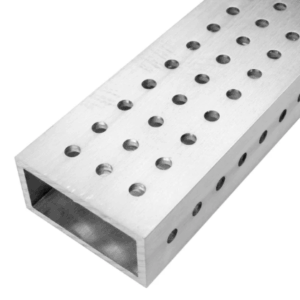
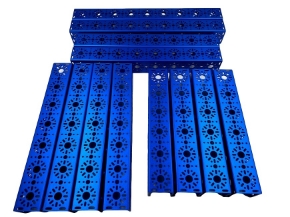
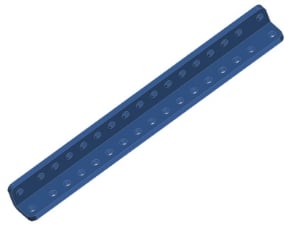
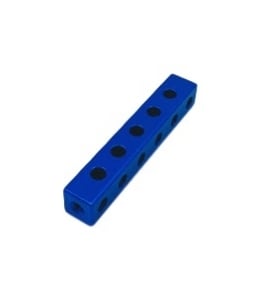
    Pre-Drilled Extrusion

    Each of these accessories is designed to help teams build faster, wire reliably, and focus on programming and autonomous performance.

    Build Smarter and Compete Stronger

    The NavX3-CAN makes your robot smarter, easier to program, and more reliable on the field. Whether you’re a rookie team taking your first steps or an advanced team chasing precision, it gives you the edge you need this FIRST® Robotics Competition REBUILT™ season.

    Studica Robotics also offers a range of FRC-ready components to support your build, including flexible bonded wire in multiple gauges, CAN and sensor-specific options, and pre-drilled extrusion at competitive prices. These tools help teams get up and running quickly so they can focus on programming and optimizing autonomous routines.

    Get ready for an exciting FRC season and take your robot’s performance to the next level with NavX3-CAN and the supporting components designed to help your team succeed.
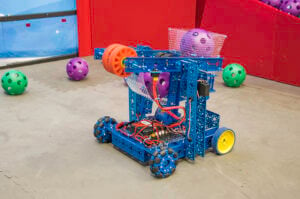
    0 FTC Robot Build: Starter Kit and Drive Base Kit Upgrade Ideas

    Quick Summary: Building a reliable, high-performing robot for the 2025-2026 DECODE Season is one of the most rewarding parts of the FTC robot build process. Whether your team is using the Studica Robotics FTC Starter Kit or the FTC Drive Base Kit, both systems provide a strong mechanical foundation. However, the real power lies in following an iterative design approach, where you prototype, test, analyze, and refine your robot over time.

    This article guides teams through practical, beginner-friendly methods to upgrade both kits while enhancing their engineering skills.

    Why Iteration Matters for Your FTC Robot Build

    One of the most valuable lessons in FTC is understanding that robots are not built once; they’re built over time. Every test, every failure, every small adjustment moves your team closer to a stable, high-scoring machine. Both Studica Robotics kits are designed to support that iterative design process:

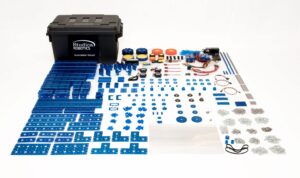
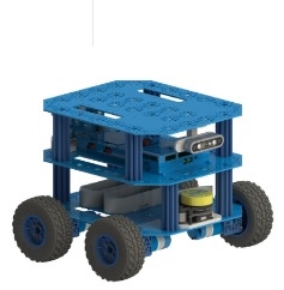
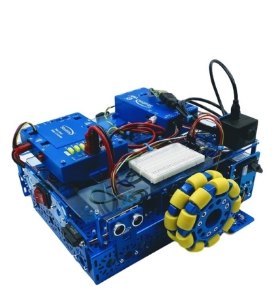
    FTC Starter Kit Helps teams quickly assemble an FTC Starter Bot so they can test early, begin programming, and learn drivetrain behavior. FTC Drive Base Kit Offers a complete Mecanum drivetrain that teams can refine and expand with their own scoring mechanisms.
    Studica Robotics FTC Starter Kit and FTC Starter Bot FTC Drive Base Kit from Studica Robotics - New Colors!
    View Kit Contents/BOM

     FTC Starter Kit 2025-2026 Season (DECODE™)

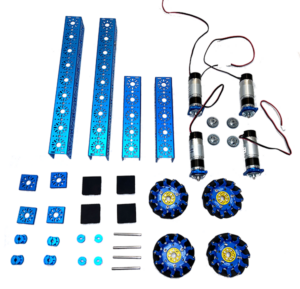
    View Parts List

    FTC Drive Base Robotics Kit - v2 Components

    Iterating early and often helps teams: ➡️ Improve driving performance ➡️ Test mechanisms in real-world conditions ➡️ Make informed upgrades instead of guessing ➡️ Build confidence with hardware and mechanical systems

    The Engineering Cycle Behind FTC Iteration

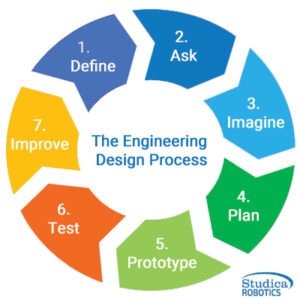
    Iterative design in FTC is not a random trial and error process. It is a structured engineering cycle that mirrors professional engineering practices. Every improvement your team makes follows the same core steps found in professional engineering:

    Define → Ask → Imagine → Plan → Prototype → Test → Iterate

    Engineering Design Process

    This cycle helps teams:

    ➡️ Identify what needs to change or improve

    ➡️ Explore constraints, rules, and existing solutions

    ➡️ Brainstorm multiple ways to solve the problem

    ➡️ Select an approach that fits strategy and resources ➡️ Build quick prototypes to try ideas early

    ➡️ Test designs on the field to gather real performance data

    ➡️ Refine based on what the tests reveal Using these steps gives teams a clear, repeatable method for refining mechanisms, improving scoring consistency, and strengthening overall robot reliability throughout the season. Review the full breakdown of the Engineering Design Process.

    How to Iterate Effectively During Your FTC Robot Build

    Regardless of which kit your team uses, these principles ensure smarter and safer iteration.

    ➡️ Make one change at a time to isolate what works and what does not

    ➡️ Test early and test often to see real performance in the field

    ➡️ Take pictures and document changes to save time during troubleshooting

    ➡️ Keep wiring organized to reduce disconnects and simplify servicing

    ➡️ Build with symmetry when possible to make balancing and reinforcement easier

    Iterating with the Studica Robotics Building System

    The Studica Robotics building system is designed for easy reconfiguration, ideal for rapid prototyping and refinement during an FTC robot build. The Studica Robotics Structure Advantage

    Key Advantages:

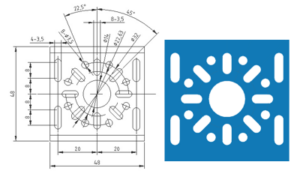
    Radial Hole Pattern: The unique hole pattern makes most structural pieces universally compatible, allowing parts to be easily repositioned or swapped.

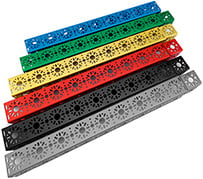
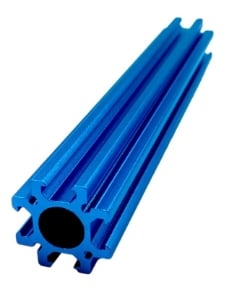
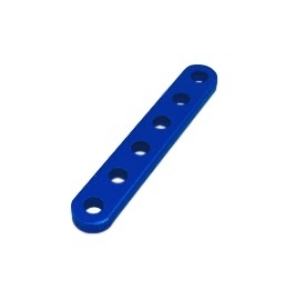
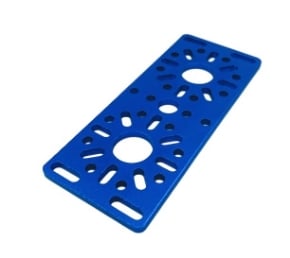
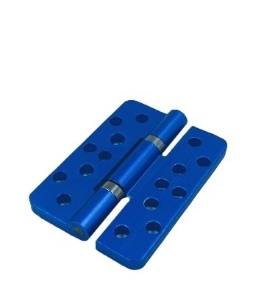
    Versatile Structural Components: Available in multiple lengths and colors for refined prototyping:

    Easy to Swap and Adjust: Consistent hole spacing allows teams to:

        • Reinforce weak points
        • Add bracing
        • Change wheel types
        • Adjust motor layout
        • Mount sensors cleanly

    This flexibility is exactly what teams need when refining their robot design.

    Upgrading the Starter Kit for Your FTC Robot Build

    The FTC Starter Kit provides the baseline components for this season’s DECODE Starter Bot. It is designed to help teams:

    • Begin programming both autonomous and tele-op
    • Drive-test early
    • Understand drivetrain behavior
    • Work with OMS components
    • Add prototype mechanisms to the FTC Starter Bot to evaluate ideas early in the season.

    Once the Starter Bot is assembled and tested, teams can begin upgrading it.

    FTC Starter Kit Upgrade Ideas

    1. Add Low-Profile U-Channel Wheel Guards:
      Prevents field elements or other robots from catching on the drivetrain.
    2. Experiment with Different Flex Wheels:
      Different durometer (hardness) ratings affect how flex wheels compress and interact with game pieces, helping teams fine-tune intake behavior.
    3. Explore Motor Options:
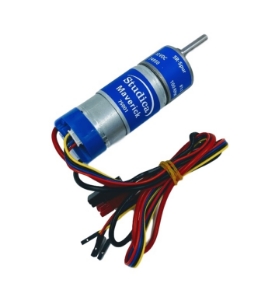
      Studica Robotics offers Maverick HEX shaft motors with multiple planetary gearbox options available. Teams frequently choose between higher torque options and higher RPM options, depending on their drive strategy or mechanism needs.
    4. Reinforce the Chassis:
    5. Extra brackets or beams help maintain rigidity as mechanisms are added.
    6. Transition to a Mechanism-Ready Chassis: Many teams take the FTC Starter Bot’s scoring mechanism concepts and move them onto a more competition-ready Mecanum chassis.

      This helps teams learn:
      🔹 How to mount mechanisms cleanly
      🔹 How to maintain access to wiring
      🔹 How to improve scoring consistency

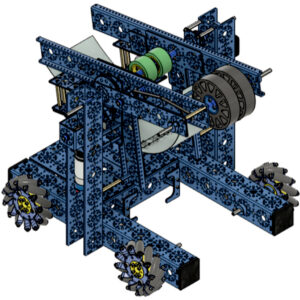
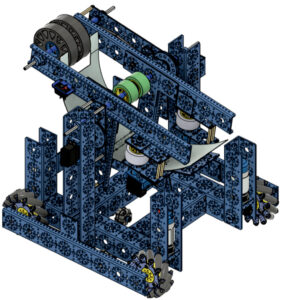
    FTC Starter Bot: Shooter on Mecanum Chassis

    This example takes the scoring system from the Studica Robotics FTC Starter Bot and places it onto a refined, competition ready Mecanum chassis. It’s a great starting point for teams looking to practice drivetrain control, get comfortable with strafing, and improve scoring efficiency.


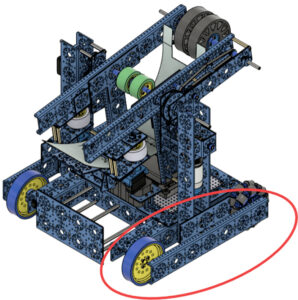
    FTC Starter Bot: Wheel Guard Configuration

    This variation keeps the core Starter Bot design but adds wheel guards to boost durability and protect the drivetrain. The guards help prevent walls, other robots, and game elements from catching on the wheels or interfering with rotation.
    FTC Starter Bot Shooter with Mecanum Wheels FTC Starter Bot with Wheel Guard blog
    What it demonstrates: How teams can reuse a proven mechanism while upgrading mobility for smoother alignment, better field positioning, and more consistent scoring. What it demonstrates: A simple, low-effort upgrade that improves reliability without significant structural changes.

    Upgrading the FTC Drive Base Kit

    The FTC Drive Base Kit provides a complete mecanum drivetrain with omnidirectional movement, giving teams flexibility when designing mechanisms. Unlike the FTC Starter Kit, the FTC Drive Base Kit only provides the materials needed to create a drivetrain, giving teams total creative freedom to design their own scoring mechanisms.

    FTC Drive Base Kit Upgrade Ideas

    1.  Reinforced Mecanum Wheel Guards - Helps protect rollers during contact-heavy gameplay using:
      🔹 Standoffs
      🔹 T Brackets
      🔹 End Piece Plates
      🔹 Low-Profile U-Channels
    2. Vertical Motor Mounting - Some teams choose to mount motors vertically to create a clean underside with space for:
      🔹 Odometry
      🔹 Sensors
      🔹 Cable routing
    3. Leave Room for Sensors and Expansion - The area under the 288 mm U-Channels is ideal for:
      🔹 Odometry pods
      🔹 Distance sensors
      🔹 IMU stabilization mounts
      🔹 Future scoring mechanisms
    4. Improve Structural Rigidity - As teams add mechanisms, reinforcing the drivetrain with additional brackets or cross-members helps maintain frame strength.

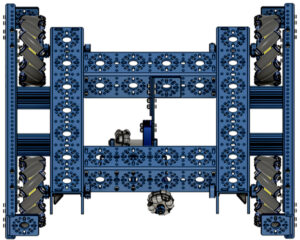
    FTC Drive Base Kit: Protected Drivetrain with Odometry Support

    This version doesn’t include scoring mechanisms, but it features reinforced wheel guards designed to shield the Mecanum rollers and support the drivetrain during high-contact DECODE gameplay and space for odometry pods.

    FTC Drive Base Kit: Vertical Motor Mount for Under-Channel Odometry Space

    This design is a more competition-focused refinement of the FTC Drive Base Kit v2. The motors are mounted vertically, leaving a clean channel beneath the 288 mm U-Channels—perfect for odometry pods, sensors, or future add-ons. It also includes reinforced Mecanum wheel guards built using standoffs, T-brackets, end plates, and low-profile U-Channels to help protect the wheels from hard impacts.
    FTC Drivebase Kit with Wheel Guards and Odometry Kit Top View FTC Drivebase Kit vertical motor mount drivebase
    What it demonstrates: Wheel guards and integrated odometry pods for more accurate autonomous tracking and movement. What it demonstrates: A clean, expandable layout optimized for sensors and autonomous performance.

    Frequently Asked Questions

    What’s the main difference between the FTC Starter Kit and the FTC Drive Base Kit?

    The FTC Starter Kit includes everything needed for a baseline Starter Bot. The FTC Drive Base Kit is drivetrain-only, giving teams full freedom to design.

    Do I need special tools to upgrade the FTC Starter Bot?

    No. The unique Studica Robotics hole pattern allows parts, motors, gears, and other components to connect easily without special equipment.

    Can I use the FTC Starter Bot for prototyping?

    Yes. Many teams test early mechanisms or scoring ideas on the FTC Starter Bot.

    Can the FTC Drive Base Kit support advanced mechanisms?

    Absolutely. Its open layout is designed for sensors, scoring systems, and expansion structures.

    Should I choose torque or high-RPM motors?

    It depends on your design. Many teams prototype with different planetary gearbox ratios on their motor to determine their preferred performance.

    Why is iteration so important in FTC?

    Each change helps teams improve reliability, score faster, and understand how mechanical decisions affect robot behavior.

    Where can I learn more about the engineering design process?
    Learn more here: Dive into Robotics with the Engineering Design Process

    Closing Thoughts

    Both the FTC Starter Kit and FTC Drive Base Kit give teams a reliable starting point for their FTC robot build. Most teams improve performance by using the design-test-refine process reinforcing structure and refining layouts throughout the season. These adjustments help teams understand mechanical behavior while gradually developing a more consistent robot.

    0 Inside WorldSkills Asia Taipei 2025: Autonomous Mobile Robotics

    Quick Summary: WorldSkills Asia Taipei 2025 brought together top young talent from across the region to compete, innovate, and showcase emerging skills in technical fields. One of the most anticipated categories, Autonomous Mobile Robotics (AMR), featured Studica Robotics as the Premium Sponsor and official equipment provider. Competitors designed, built, and programmed autonomous robots to tackle real-world agricultural challenges, using components from the WorldSkills Lyon 2024 Mobile Robotics Collection, a comprehensive kit containing more than 1,600 parts.

    This article explores the event, the competition structure, the role of Studica Robotics, and why AMR continues to shape the future of smart agriculture and industrial automation.

    What Is WorldSkills Asia Taipei 2025?

    WorldSkills Asia Taipei 2025WorldSkills Asia Taipei 2025 is a major regional skills competition focused on advancing excellence in technical and vocational education and training (TVET). It brings together emerging talent to compete in a wide range of skill categories, from engineering and manufacturing to digital technology and automation. The event offers young professionals a platform to test their skills, solve real-world problems, and benchmark themselves against international standards. The competition welcomed over 500 participants from 29 member countries.

    Inside the AMR Competition at WorldSkills Asia

    The Autonomous Mobile Robotics (AMR) skill competition at WorldSkills Asia Taipei is more than a robotics competition; it’s a test of engineering, problem-solving, and innovation under pressure. Each team, composed of two competitors, must work through every stage of robotic development: designing the mechanical structure, assembling components, integrating electronics, programming behavior, troubleshooting hardware, and ultimately demonstrating full autonomy.

    Real-World Agricultural Technology Challenges

    The WorldSkills Asia Taipei 2025 AMR competition was centered around agricultural robotics, reflecting global trends in smart farming and automated food production. With the industry facing labor shortages, environmental pressures, and growing demand, autonomous robots offer promising solutions.

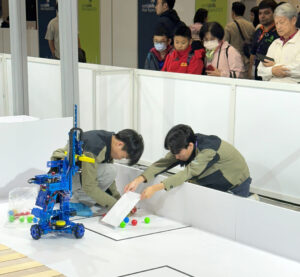
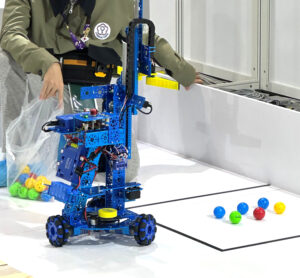
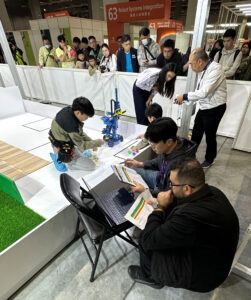
    WorldSkills Asia Taipei 2025 Autonomous Mobile Robotics Competition PhotoTo mirror real conditions, competitors built robots capable of tasks such as:

    • Navigating unpredictable environments

    • Detecting and identifying agricultural items

    • Handling objects delicately (like produce or eggs)

    • Performing precise movements

    • Mapping and interacting with a structured arena.

    The competition culminated in a timed, high-pressure performance test. Robots were required to move through a defined course, complete object-handling tasks, reach service zones, and execute autonomous maneuvers as efficiently and accurately as possible. Strategy mattered just as much as technical skill: competitors had to manage restarts, avoid penalties, and balance manual vs. autonomous actions to maximize points. Watch a video of a robot moving throught the course at the WorldSkills Asia Taiwan 2025 AMR competition.

    WorldSkills Asia Taipei 2025 Results

    This year’s AMR competition included teams from the United Arab Emirates, Chinese Taipei, South Korea, Thailand, Saudi Arabia, Bahrain, and Qatar.

    Senior Competition:Autonomous Mobile Robotics Medal Winners WorldSkills Asia Taipei 2025

    • Gold: Team Chinese Taipei
    • Silver (tie): Team South Korea and Team Thailand

    Junior Competition:

    • Gold: Team Chinese Taipei
    • Silver: Team Saudi Arabia

    Congratulations to all competitors for their hard work, creativity, and commitment to excellence. And a big kudos to this year’s medalists on their outstanding achievements!

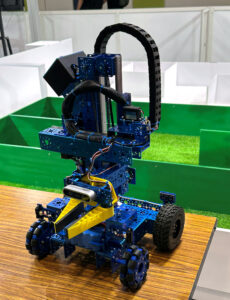
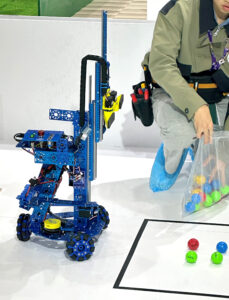
    Team Thailand WorldSkills Asia Taipei 2025 AMR Competition WorldSkills Asia Taipei 2025 Autonomous Mobile Robotics Chinese Taipei Robot

    Studica Robotics at WorldSkills Asia Taipei 2025

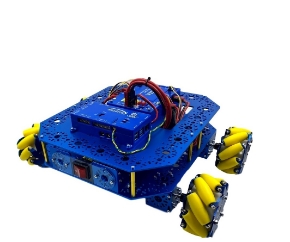
    WorldSkills Asia Taipei 2025 Autonomous Mobile Robotics LFor this event, Studica Robotics served as the Premium Sponsor and the official equipment supplier for the AMR competition. Every team relied on robotics components from the WorldSkills Lyon 2024 Mobile Robotics Collection, a comprehensive robotics kit comprising over 1,600 mechanical and electronic parts, including key technologies such as the Titan Quad Motor Controller, VMX Robotics Controller, 3D Depth Camera, and 360° LiDAR.

    Studica Robotics also partnered with ReMiSYS, our Taiwan distributor, to host an interactive Try-a-Skill booth at TaiEx2. Visitors had the opportunity to explore Studica Robotics' products, interact with demo robots, and learn how autonomous systems are programmed and constructed. Take a look.

    As always, Studica Robotics remains committed to empowering the next generation of global robotics talent through reliable, competition-grade technology. Our involvement is part of a long-standing commitment to WorldSkills and to supporting the growth of the Autonomous Mobile Robotics skill worldwide. Studica Robotics has been a proud supporter and supplier for WorldSkills mobile robotics since 2014. We are looking forward to WorldSkills Shanghai 2026!

    Frequently Asked Questions

    Here are answers to some of the most common questions we hear about the event and AMR.

    What is WorldSkills Asia?

    WorldSkills Asia is a regional skills competition where young professionals from Asian countries compete in various vocational and technical trades to demonstrate excellence and innovation.

    What is the Autonomous Mobile Robotics skill competition?

    It’s a team robotics competition where participants design, build, program, and test mobile robots to solve real-world challenges across industries like manufacturing, agriculture, and aerospace.

    Why is Studica Robotics involved?

    Studica Robotics is the Premium Sponsor and official equipment supplier for the AMR skill, providing the industry-standard robotics systems used in training and competition worldwide.

    What kit do the teams use?

    All teams use the WorldSkills Lyon 2024 Mobile Robotics Collection, an extensive kit containing 1,600+ components designed for professional-level autonomous robotics work. This comprehensive robotics kit includes key technologies such as the Titan Quad Motor Controller, VMX Robotics Controller, 3D Depth Camera, and 360° LiDAR.

    Why focus on agriculture?

    Agriculture is rapidly shifting toward automation due to labor shortages, sustainability goals, and efficiency demands. Autonomous robots can perform tasks like planting, harvesting, and monitoring crops with precision.

    Can school robotics teams use Studica products?

    Absolutely. The same Studica Robotics robot parts and components used in WorldSkills competitions are available to schools, FTC teams, hobbyists, and university engineering programs.

    WorldSkills Asia Taipei 2025 Autonomous Mobile Robotics B WorldSkills Asia Taipei 2025 Autonomous Mobile Robotics G WorldSkills Asia Taipei 2025 Autonomous Mobile Robotics E

    Closing Thoughts on WorldSkills Asia

    The AMR competition in Taipei showcased the passion, creativity, and determination that define today’s robotics community. From the engineering challenges to the final autonomous runs, competitors demonstrated the power of collaboration and technical excellence. Studica Robotics is proud to play a role in their success and to continue providing the solutions that bring ambitious robotic ideas to life. The momentum from WorldSkills Asia Taipei now carries forward to WorldSkills Shanghai 2026, and the future looks incredibly bright!


    EV SSL