Robots are playing an ever-expanding role in our lives, from mundane daily tasks to use in industrial settings. The development of mobile robots involves designing, prototyping, programming, and rigorous testing to create robots that can solve real-world problems. Mobile robotics and robotic engineering are impactful ways to introduce students to developing technology. They present a highly effective method for increasing STEM knowledge and equipping students with invaluable skills. To develop mobile robots, you must be familiar with logic, microprocessors, and computer programming and be able to prepare specifications for the robot’s capabilities as they relate to the task at hand. Other considerations include quality control, cost-efficient design, and cost-price calculations.
Why Teach Mobile Robotics?
Let's start off with one of the most obvious reasons - students love it! The engaging and hands-on experience of building a robot easily lends itself to STEM learning. By solving complex problems, designing, and fixing robots, students also build confidence and a wide-ranging resume of skills that prepare them for successful futures. Working through the process of building a robot to complete a task nurtures a true understanding of the real-world applications of technology. This is exhilarating! Imagine having fun and, at the same time, building a wide variety of skills. This is a definite win-win scenario! Teaching mobile robotics can build a variety of crucial skills for success. Before we get technical, let's discuss the crucial soft skills involved. These skills include collaboration, communication, adaptability, leadership, conflict resolution, and problem-solving. While building an understanding of robotics, students are also developing and strengthening their skills in reading, comprehension, mathematics, and programming. They learn how to think both critically and computationally. This is also an impactful method for introducing developing technology, mechanical and electronic development, sensor, and drive technology. Through the process, your students will develop analytical reasoning skills and technical expertise.
About Studica Robotics
Studica is proud to be a Global Partner and exclusive product supplier of the WorldSkills Mobile Robotics Competition. With over three decades of experience, Studica serves customers in both education and industry. Our Studica Robotics division is responsible for designing, manufacturing, and distributing the best robotics technology products used by WorldSkills member countries to compete at the local, regional, national, and international levels and for teaching purposes. We are proud to be a part of this prestigious skill-building competition for mobile robotics. Seeing these students learn engineering skills in designing, prototyping, building, and programming autonomous mobile robots (AMR), automated guided robots (AGR), and autonomous vehicles is exciting. We also appreciate the economic benefits mobile robotics offers to the countries that participate. These benefits include building a workforce that is prepared with the skills needed to innovate, enhancing economic competitiveness, economic diversification, and technical advancement. Learn more at the WorldSkills website.
























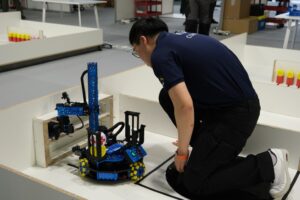 Let's start off with one of the most obvious reasons - students love it! The engaging and hands-on experience of building a robot easily lends itself to STEM learning. By solving complex problems, designing, and fixing robots, students also build confidence and a wide-ranging resume of skills that prepare them for successful futures. Working through the process of building a robot to complete a task nurtures a true understanding of the real-world applications of technology. This is exhilarating! Imagine having fun and, at the same time, building a wide variety of skills. This is a definite win-win scenario! Teaching mobile robotics can build a variety of crucial skills for success. Before we get technical, let's discuss the crucial soft skills involved. These skills include collaboration, communication, adaptability, leadership, conflict resolution, and problem-solving. While building an understanding of robotics, students are also developing and strengthening their skills in reading, comprehension, mathematics, and programming. They learn how to think both critically and computationally. This is also an impactful method for introducing developing technology, mechanical and electronic development, sensor, and drive technology. Through the process, your students will develop analytical reasoning skills and technical expertise.