




Close
All Categories
    Filters
    Preferences
    Search
    RSS

    2026, September

    0 FTC BIOBUZZ Strategy: Scoring, Robot Design & the Starter Bot

    Quick Summary: FTC BIOBUZZ™ is the 2026–2027 FIRST® Tech Challenge game presented by RTX. Alliances collect POLLEN and NECTAR, launch scoring elements into their HIVE to earn HIVE TIPS, place scoring elements in FLOWERS and GARDENS, and complete scoring and endgame objectives such as PARK. Teams will need to balance scoring opportunities with reliable robot design, driving, programming, and match strategy. The FTC Starter Bot, built with the Studica FTC Starter Kit 2026–2027, gives teams a foundation for building, testing, and developing their own BIOBUZZ strategy.

    Getting Started with FTC BIOBUZZ

    FTC BIOBUZZKickoff gave FTC teams a lot to take in. Now that we know the game, it's time to start thinking about your robot. You've seen the BIOBUZZ™ field, learned the scoring system, watched the game animation, and started thinking about what your next robot might need to do. This is when the interesting part begins! The BIOBUZZ game offers several ways to score, but your team needs to decide which opportunities make sense for your robot, your drivers, and your overall strategy. A mechanism that looks impressive on paper is only useful if the robot can execute it consistently on the field. Now that you know the BIOBUZZ game, it's time to figure out how your team wants to play it. The goal isn't to build a robot that can do everything. It's to build a robot that can reliably do what your strategy requires.

    Get Started on Your Strategy First

    It can be tempting to start sketching a robot as soon as you see the game. Before you start building, though, take some time to ask a different question: What does our team actually want this robot to accomplish during a match? BIOBUZZ gives alliances opportunities to collect POLLEN and NECTAR, interact with the HIVE, place game elements in FLOWERS and GARDENS, and complete end-of-match objectives such as PARK and establishing FLOWER ownership. HIVE TIPS also affect when additional NECTAR can be introduced into the match, creating another strategic consideration for teams.

    📌 Step 1: Visualize Your Robot

    What do you want your robot to do? What are the biggest priorities for your team? Some examples you could choose for your robot: • Collect game elements quickly and consistently • Interact with the HIVE reliably • Place game elements accurately • Move efficiently between scoring locations • Complete several different tasks • Focus on a smaller number of actions and execute them extremely consistently

    💡There isn't one required approach. The more useful question is which approach fits your team and can be tested and improved over the course of the season?

    📌 Step 2: Envision Your Match

    A good BIOBUZZ strategy isn't just about the highest-value scoring action. Think about what happens from the beginning of a match to the end:

    AUTO: What can your robot accomplish without DRIVER control?

    TELEOP: Which actions can your drivers perform quickly and repeatedly?

    ENDGAME: What does your robot need to accomplish before the match ends?

    💡 Thinking about the complete match can help your team identify where robot design, programming, and driver practice need to work together.

    BIOBUZZ Scoring at a Glance

    BIOBUZZ gives alliances several ways to earn MATCH points, so teams don't necessarily need to design a robot that can do everything. The current BIOBUZZ Competition Manual lists the following scoring values:

    Scoring Achievement MATCH Points
    AUTO LEAVE 3
    AUTO PARK 5
    TELEOP PARK 5
    HIVE TIP 20
    POLLEN and/or NECTAR remaining in a CELL 2 each
    Bottom NECTAR Bonus in a FLOWER 5
    POLLEN or NECTAR in an owned FLOWER 2 each
    POLLEN or NECTAR in a GARDEN 1 each

    BIOBUZZ also includes Ranking Points tied to match achievements, including HIVE TIP and combined LEAVE/PARK performance. Because scoring can come from several different tasks, teams can use the point structure to help decide which robot capabilities are most important to their strategy.

    💡Always check the BIOBUZZ Competition Manual and official Team Updates for the current rules and requirements.

    Turn Your Strategy Into Robot Requirements

    Once your team has an idea of how you want to play a match, the next step is figuring out what your robot needs to do to make that strategy possible. A strong BIOBUZZ strategy starts with understanding what your robot needs to do consistently during a match. Instead of designing each mechanism in isolation, think about how collection, transport, scoring, driving, and recovery all work together.

    Use the questions below as a starting point when your team is evaluating a robot design:

    Robot Challenge Questions to Ask During Design & Testing
    Collection Can the intake collect POLLEN consistently from different positions and angles?
    Transport Can the robot hold and move a game element reliably while accelerating, turning, or making contact with another robot?
    Scoring Can the robot repeat the scoring action consistently?
    HIVE Interaction How important are HIVE TIPS to your strategy? Can the robot align and launch scoring elements into the HIVE reliably?
    Driving Can drivers control the robot easily while using its mechanisms?
    Recovery What happens after a missed intake, imperfect alignment, or failed scoring attempt?
    Cycle Time How long does it take to collect, score, and reset?
    Field Variation Can the mechanism tolerate reasonable variations in field and game-element positioning?

    Prototype the Hard Problems First

    You don't need your final robot figured out right away. Prototype the functions that could have the biggest impact on your strategy first.

    📌 Quick Prototype Check

    Test Ask Yourself
    Intake Does it work from different angles and positions?
    Scoring Can it repeat the action consistently?
    Alignment How much driver correction does it require?
    Cycle Time How quickly can you collect, score, and reset?
    Recovery What happens when something goes wrong?
    Real-World Testing Does it still work while driving, turning, and dealing with imperfect conditions?

    💡Watch the failures. They can reveal more about your design than successful attempts. Test individual mechanisms first, then combine them and repeat the full cycle under conditions that are increasingly similar to a match.

    💡BIOBUZZ scoring elements are not perfectly spherical and may vary in size, and some scoring-element placement may vary slightly during field setup. Designing mechanisms that can tolerate reasonable variation can help your robot perform more consistently.

    💡Build for repeatability, control, and recovery, not just a mechanism that works once.

    Where the FTC Starter Bot Fits In

    You don't have to start your BIOBUZZ robot from a blank sheet of paper.

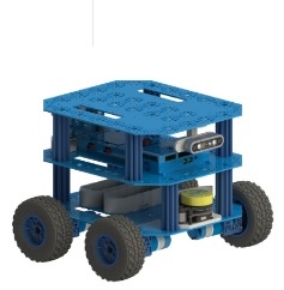
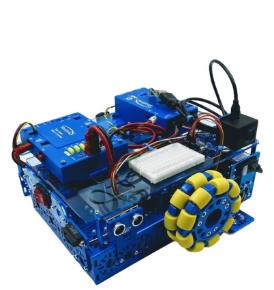
    Studica FTC Starter Bot

    The FTC Starter Bot from Studica Robotics gives teams a foundation for building and experimenting, with resources including build instructions, CAD files, and a wiring diagram to help with the mechanical and electrical aspects of the robot.

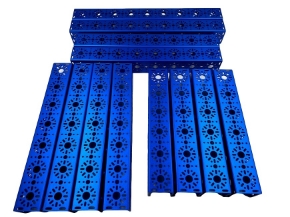
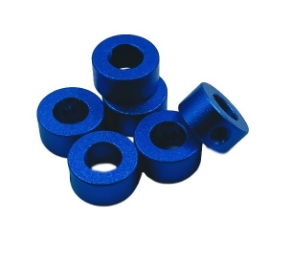
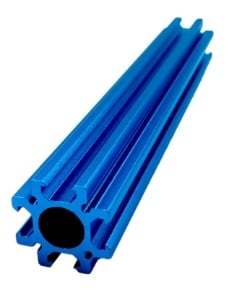
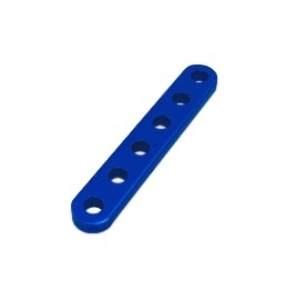
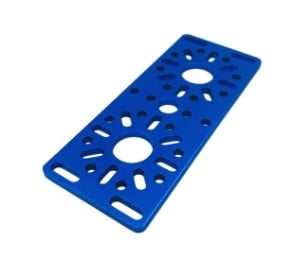
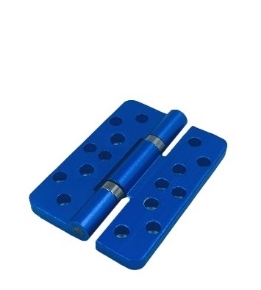
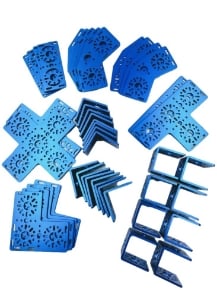
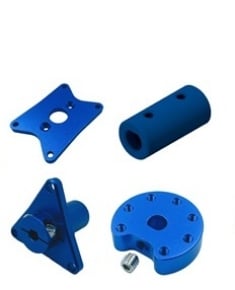
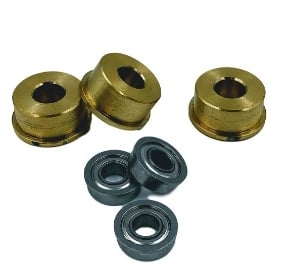
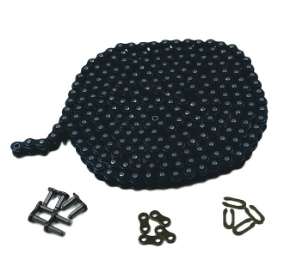
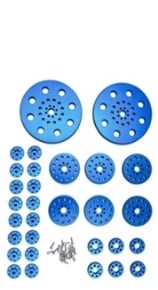
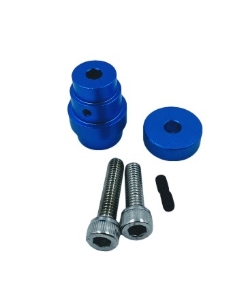
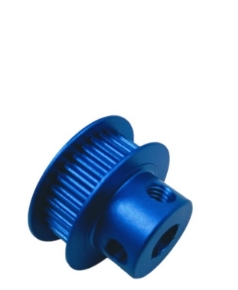
    The FTC Starter Kit also gives teams a broad selection of structural and mechanical components to experiment with as their design develops. Different wheels, shafts, gears, pulleys, belts, brackets, and other components can be configured in different ways, giving teams room to test different approaches to intake, movement, scoring, and mechanism design.

    For BIOBUZZ, build it, drive it, test it, and then start exploring how you can make the robot your own. Maybe you want to try a different intake design, experiment with another scoring mechanism, or adapt the robot to take a different approach to the HIVE.

    Because the components can be reconfigured and reused, your team can make changes as testing reveals what works and what doesn't. Instead of having to figure out the final robot immediately, you can move from an idea to a prototype, learn from it, and build the next version.

    That's the point: the Starter Bot doesn't have to be the finished robot. It can be the beginning of the design process.

    Build, Test, Modify, Repeat

    Starting with a foundation can give your team a practical way to learn drivetrain, mechanical, wiring, and programming fundamentals while you begin exploring what you want your BIOBUZZ robot to do. FTC Starter Kit 2026-2027 Season (BIOBUZZ™) FTC Starter Kit The Studica FTC Starter Kit 2026–2027 is designed as a building and prototyping system that teams can use to create their own robot designs for BIOBUZZ. The kit includes structural and motion components intended to support different configurations and approaches to robot design. That flexibility matters because your first design probably won't be your final design. As your team learns more about BIOBUZZ, you may discover that:

    • A mechanism you expected to work isn't reliable enough
    • A simpler design is easier for your drivers to control
    • Your strategy requires a different intake or scoring approach
    • Your robot needs to be more compact or maneuverable
    • A prototype reveals a problem you hadn't considered
    • A small mechanical change makes a major difference in performance

    That's normal. FTC robot design is an iterative process. Build something, test it, learn from the results, and make the next version better.

    Start Small, Learn, and Build From There

    💡Kickoff can make it feel like your team needs to figure out the entire season right away. You don't. Start with the biggest technical challenge you can test now, learn from the results, and let those findings shape your next design decisions. You don't need a final robot on day one. As your robot develops, your strategy can develop with it.

    BIOBUZZ Resources for FTC Teams

    Keep these official and team resources handy throughout the season. The Competition Manual should be your primary reference for official game rules and requirements, while the other resources can help with game updates, robot development, and Starter Bot builds.

    Resource What You'll Find
    BIOBUZZ Competition Manual Official game rules, scoring, field information, gameplay, robot construction, tournament requirements, and other season rules.
    FIRST Tech Challenge BIOBUZZ Game & Season Materials Competition Manual, game animation, Team Updates, Q&A information, and other official season materials.
    FTC Robot & Team Resources Technical documentation, programming resources, team resources, and other materials for FTC teams.
    Studica FTC Starter Bot Resource Guide Starter Bot build instructions, CAD files, wiring diagram, and resources for building and experimenting with the robot.

    Frequently Asked Questions

    What is FTC BIOBUZZ?

    BIOBUZZ™ presented by RTX is the 2026–2027 FIRST Tech Challenge game. Alliances collect POLLEN and NECTAR and use them to interact with the HIVE, FLOWERS, and GARDENS while completing scoring and endgame objectives.

    What should teams focus on after BIOBUZZ kickoff?

    Start by identifying the scoring and game actions that fit your team's strategy. Then determine which robot mechanisms are needed to perform those actions reliably. Early prototyping and testing can help your team make those decisions before committing to a final design.

    Is the FTC Starter Bot the BIOBUZZ competition robot?

    Yes. The FTC Starter Bot is designed as a competition-ready foundation that teams can build, test, and use as they develop their own BIOBUZZ robot. Teams can compete with the Starter Bot as built or modify and expand the design to match their strategy, mechanisms, and driving preferences.

    What is the FTC Starter Kit 2026–2027?

    The Studica FTC Starter Kit 2026–2027 is a collection of robot-building components designed to give FTC teams a foundation for creating and prototyping their own BIOBUZZ robot designs.

    Where can I find the official BIOBUZZ rules?

    The official BIOBUZZ Competition Manual is the primary reference for the game rules. Teams should also monitor FIRST Team Updates for official revisions and season information.

    How long are the AUTO and TELEOP periods in FTC BIOBUZZ?

    The BIOBUZZ MATCH begins with a 30-second AUTO period, followed by an 8-second transition period and a 2-minute TELEOP period. During AUTO, robots operate without driver control. During TELEOP, drivers remotely operate their robots.

    Start Building Your BIOBUZZ Robot

    The 2026–2027 BIOBUZZ season is here, and now the real design work begins. You don't need to have your entire robot figured out on day one. Start with a strategy, identify the challenges that matter most, and build something you can test.

    The Studica FTC Starter Bot Build Guide gives your team a practical starting point with build instructions, CAD files, and a wiring diagram. Start building, test what works, and use what you learn to shape your BIOBUZZ robot.

    Build it. Drive it. Test it. Change it.

    Then do it again.

    As your team learns more about BIOBUZZ, your robot and strategy can evolve together.

    Helpful Articles for FTC Teams

    0 FTC Robotics Season Prep: 9 Tips to Start BIOBUZZ Strong

    Quick Summary: BIOBUZZ™ kickoff is almost here! With the 2026–2027 FIRST® Tech Challenge season just days away, now is the time to make sure your team, workspace, skills, and equipment are ready. Use this FTC robotics season prep checklist to get organized, build team confidence, and hit the ground running when the new game is revealed.

    Get Your FTC Team Ready for BIOBUZZ™

    The countdown to the new FIRSTÂŽ Tech Challenge is on. On September 12, FTC teams will discover the new game challenge presented by RTX and begin turning ideas into their next competition robot.

    You may not know what the game will require yet, but there is plenty your team can do before kickoff. Use these nine preseason tips to get organized, strengthen your team's skills, and prepare to move quickly once BIOBUZZ™ is revealed.

    FTC Robotics Season Prep Tip #1Tip 1: Take a Quick Look Back at Last Season

    Before jumping into a new season, take a few minutes to reflect on your DECODE™ experience. A quick review can help your team carry forward what worked and avoid repeating past challenges.

    📌 FTC Preseason Check-in:

    ☐ Celebrate: What did our team do particularly well?
    ☐ Identify challenges: What slowed us down or caused problems?
    ☐ Review decisions: Which design or programming choices would we change?
    ☐ Build skills: What skills should we strengthen this season?
    ☐ Set goals: What do we want to accomplish during BIOBUZZ™?

    You don't need a lengthy meeting. Even a quick team conversation can help everyone start the new season with a clear focus.

    FTC Robotics Season Prep Tip #2Tip 2: Get Your Team on the Same Page

    With kickoff approaching, make sure everyone knows how your team will work together once the game is revealed.

    Welcome new members, review team expectations, and reinforce the FIRST Core Values, including Gracious ProfessionalismÂŽ and CoopertitionÂŽ.

    This is also a good time to clarify team roles and responsibilities. Who will focus on mechanical design? Who will program? Who will document the build? Who will handle outreach and communications? Your team may adjust those roles once you understand BIOBUZZ™ , but having a starting point will help everyone jump into action.

    FTC Robotics Season Prep Tip #3Tip 3: Identify Strengths & Skill Gaps

    You don't need to learn every robotics skill before kickoff. Instead, take a quick look at what your team already knows and where you may need additional support.


    📌FTC Team Skills Checklist

    ✓ Design and Engineering: CAD, mechanical design, fabrication, and prototyping ✓ Programming: Java, Blocks, sensors, control logic, and autonomous routines ✓ Electronics: Wiring, power distribution, and troubleshooting ✓ Creative Skills: Presentations, graphic design, photography, video, and social media ✓ Soft Skills: Communication, collaboration, organization, and problem-solving

    Knowing your strengths and gaps now will make it easier to assign responsibilities once the BIOBUZZ™ challenge is revealed.

    💡Bonus Tip:

    If your team plans to submit an Engineering Portfolio, start documenting from day one. Keep track of design ideas, testing, decisions, successes, and failures throughout the season rather than trying to recreate everything later.

    FTC Robotics Season Prep Tip #4Tip 4: Start Practicing

    You may not know what BIOBUZZ™ will ask your robot to do yet, but you can practice building and programming. Use this time to experiment with common robot systems such as drivetrains, arms, lifts, linear mechanisms, intakes, servos, sensors, and autonomous routines. The goal isn't to build your robot before kickoff. It's to get your team comfortable designing, building, testing, and troubleshooting so you're ready to prototype quickly when the game is revealed.

    FTC Robotics Season Prep Tip #5Tip 5: Organize Your Workspace and Inventory

    Once kickoff arrives, you don't want to spend valuable build time looking for parts or discovering that something important is missing.

    Give your workspace a quick preseason reset and make sure your team knows where everything belongs.

    📌 Sample Inventory Checklist:

    ☐ Motors and servos ☐ Actuators ☐ Fasteners and hardware ☐ Structural components ☐ Slide rails ☐ Encoders and sensors ☐ Batteries ☐ Power components ☐ Tools and fabrication equipment Check batteries, chargers, cables, and other frequently used equipment while you're at it. A little organization now can save significant time later.

    FTC Robotics Season Prep Tip #6Tip 6: Know Your Hardware

    Now isn't necessarily the time to completely rethink your robot hardware strategy. Instead, make sure your team understands the components you already have and knows which parts could be useful once the game is revealed.

    📌 Review Your Available Hardware

    • Drivetrain components for speed and maneuverability
    • Smart servos for controlled movement
    • Linear actuators for lifts and extensions
    • Slide rails for linear mechanisms
    • Power components for reliable energy distribution
    • Encoders and odometry components for autonomous navigation

    If there are components your team has never used before, now is a good time to familiarize yourselves with how they work.

    That way, when a BIOBUZZ™ mechanism calls for a particular type of motion or control, your team can spend less time learning the hardware and more time solving the engineering challenge.

    FTC Robotics Season Prep Tip #7Tip 7: Learn from the FTC Community

    You don't have to start from scratch. One of the best resources available to FTC teams is the larger robotics community. Review technical documentation  and check out the FTC Community Forum. You can also explore related videos on YouTube, the FTC subreddit, watch videos on the FUN Robotics Network, and browse Chief Delphi.

    Use this final preseason stretch to watch robot reveals, review match footage, and see how other teams have approached engineering challenges.

    📌 FTC Team Learning Activities

    ✓ Watch FTC robot reveal and match videos ✓  Review past game strategies ✓  Explore technical documentation ✓  Research mechanisms you're interested in ✓  Discuss ideas and approaches with other teams Use what you see as inspiration and a learning opportunity. The goal is to understand different engineering approaches and spark ideas your team can develop into its own solutions.

    FTC Robotics Season Prep Tip #8Tip 8: Make a Season Game Plan

    The BIOBUZZ™ challenge may be unknown right now, but your team's schedule doesn't have to be. Before kickoff, make sure you have a plan for managing the weeks ahead.


    📌 Add Key Dates to Your FTC Calendar

    ☐ Build and design milestones ☐ Testing and iteration time ☐ Autonomous development ☐ Driver practice ☐ Scrimmages and competitions ☐ Engineering Portfolio updates ☐ Judging preparation ☐ Outreach and team activities

    Once the game is revealed, you can add game-specific goals and deadlines. Having a basic framework already in place will help your team stay focused when the build season gets busy.

    FTC Robotics Season Prep Tip #9Tip 9: Check Your Build-Ready Supplies

    Having the right parts on hand helps your team prototype quickly and iterate once the BIOBUZZ™ challenge is revealed. Take one final look at your build inventory and identify any components you'll want available for early prototypes.

    Need to fill any gaps? These Studica Robotics components can help teams prepare for the season, from power and motion control to linear mechanisms and autonomous performance.

    Power Systems

    • Servo Power Block and FTC Power Block
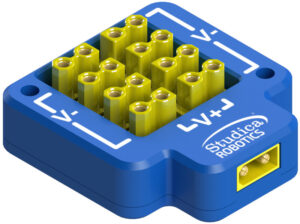
      These compact power solutions help provide reliable power distribution for FTC robot systems, including dedicated power for servos.
    Servo Power Block with XT30 Male to JST-VH Cable Bundle Servo Power Block with XT30 Male to JST-VH Cable Bundle - Part 75005 Studica Robotics FTC Power Block - Part 70407 Studica Robotics FTC Power Block - Part 70407
    • Battery and Power Switch
      A competition-ready power system starts with an FTC-approved 12V NiMH battery and an approved main power switch. Studica's 12V 3000mAh NiMH battery and On/Off Power Switch Kit are options for teams building or refreshing their power system.
    FIRST Legal - 12V 3000 mAh NiMH Battery Studica 12V 3000mAh NiMH Battery Pack PP45 ARES – Part 70025 Studica On/Off Power Switch - Part 70182 XT30 Female to PP45 Cable XT30 Female to PP45 Cable - Part 70195

    Motion Control Components

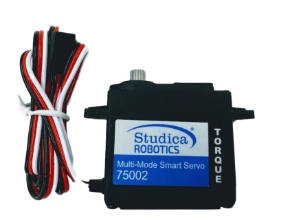
    • Multi-Mode Smart Servos
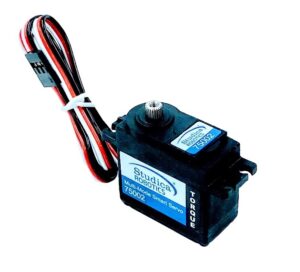
      Multi-mode smart servos provide flexible motion options for mechanisms such as arms, intakes, and other moving assemblies.
    • Linear Servo Actuators
      Linear servo actuators provide controlled push-and-pull movement for lifts, arms, and other mechanisms.
    • Slide Rails
      Aluminum slide rails provide a strong, lightweight solution for linear mechanisms, including lifts and extending arms.
    Multi-Mode Smart Servo MotorMulti-Mode Smart Servo Motor - Part 75002 FIRST Legal - Linear Servo RC Actuator Studica Linear Servo RC Actuator - Part 75014 Slide Rails from Studica Robotics Slide Rails from Studica Robotics

    Odometry and Autonomous Performance

    • Cypher Max Encoder with 38mm Omni Wheel
      For teams working to improve autonomous navigation, odometry components can provide more precise robot tracking and positioning. The Cypher MAX Encoder paired with a 38mm Omni Wheel offers a compact option for teams exploring advanced autonomous performance.
    Cypher Max Through Bore Encoder Cypher MAX Through Bore Encoder - Part 75051 38mm Omni Wheel 38mm Omni Wheel - Part 76259

    Frequently Asked Questions

    What should an FTC team do before kickoff?

    Before FTC kickoff, focus on readiness rather than predicting the game. Organize your workspace, check your inventory, review team roles, test hardware, and confirm your schedule.

    Should we build a robot before the BIOBUZZ™ game is revealed?

    You don’t need a complete robot. Use preseason time to practice with drivetrains, mechanisms, sensors, servos, and programming. Small prototypes can help build skills you’ll use after the game is revealed.

    What FTC hardware should we have ready for kickoff?

    Make sure you have the basics for prototyping and building, including motors, servos, structural components, fasteners, power components, batteries, sensors, and tools. Know what you have and what you may need.

    How can FTC teams prepare before the game is revealed?

    Focus on transferable skills like mechanical design, programming, autonomous routines, prototyping, troubleshooting, and teamwork.

    Where can FTC teams find inspiration?

    Look to robot reveal videos, match footage, technical documentation, FIRST resources, robotics forums, and other FTC teams. See how others solve problems and use those ideas to inspire your own designs.

    How should we prepare new FTC team members?

    Get new members hands-on, introduce them to your tools and processes, and pair them with experienced students when possible. Clear responsibilities and mentorship can help them become confident contributors.

    Should we start working on our Engineering Portfolio now?

    Yes! Document your season from the start, including design ideas, prototypes, testing, challenges, improvements, outreach, and team accomplishments.

    When should FTC teams start planning their season? Ideally, before kickoff. With BIOBUZZ™ just days away, now is the time to organize your workspace, review your team’s skills, confirm your schedule, and get your hardware ready.

    Start BIOBUZZ™ Strong

    Kickoff is almost here, and your team doesn't have to wait for the game reveal to start preparing. A few simple steps now, like organizing your workspace, checking your equipment, reviewing your team's strengths, and getting everyone on the same page, can give your team a stronger starting point when the BIOBUZZ™ challenge is revealed.

    Studica Robotics offers FTC-legal robot components and building solutions to help teams prototype, build, test, and iterate throughout the season. Get ready for the 2026–2027 BIOBUZZ™ season and make the most of every build day ahead. Browse FTC robot parts and kits and get ready to build!

    0 WorldSkills Shanghai 2026: AMR and UAS Countdown

    Quick Summary: The countdown to WorldSkills Shanghai 2026 is on! Taking place September 22–27, 2026, the 48th WorldSkills Competition will bring together approximately 1,400 Competitors from 73 countries and regions to compete across 64 skill competitions. Among them are Autonomous Mobile Robotics and Unmanned Aerial Systems, two rapidly evolving fields that bring together engineering, electronics, software, automation, and problem-solving. As a WorldSkills Global Partner and the exclusive supplier for the WorldSkills Autonomous Mobile Robotics Competition, Studica Robotics is proud to support the global skills community and follow these two exciting competitions as Competitors prepare to take the stage in Shanghai.

    WorldSkills Shanghai 2026 Is Almost Here

    Every two years, the WorldSkills Competition brings together the world's top young talent in technical and vocational skills for a global celebration of skills excellence. Competitors have earned their places at WorldSkills through national and regional selection competitions, representing years of dedication, preparation, and technical achievement.

    WorldSkills Skill Sectors

    The 64 skill competitions are organized across six skill sectors.

    Skill Sector Number of Skills Skills in This Sector
    Construction and Building Technology 14 Bricklaying, Cabinetmaking, Carpentry, Concrete Construction Work,
    Digital Construction, Electrical Installations,
    Intelligent Security Technology, Joinery, Landscape Gardening,
    Painting and Decorating, Plastering and Drywall Systems,
    Plumbing and Heating, Refrigeration and Air Conditioning,
    Wall and Floor Tiling
    Creative Arts and Fashion 7 3D Digital Game Art, Digital Interactive Media Design,
    Fashion Technology, Floristry, Graphic Design Technology,
    Jewellery, Visual Merchandising
    Information and Communication Technology 8 Cloud Computing, Cyber Security, ICT Network Infrastructure,
    IT Network Systems Administration, Mobile Applications Development,
    Software Applications Development, Software Testing,
    Web Technologies
    Manufacturing and Engineering Technology 17 Additive Manufacturing, Autonomous Mobile Robotics,
    Chemical Laboratory Technology, CNC Milling, CNC Turning,
    Electronics, Industrial Control, Industrial Design Technology,
    Industrial Mechanics, Industry 4.0, Mechanical Engineering CAD,
    Mechatronics, Optoelectronic Technology, Renewable Energy,
    Robot Systems Integration, Water Technology, Welding
    Social and Personal Services 10 Bakery, Beauty Therapy, Cooking, Dental Prosthetics,
    Hairdressing, Health and Social Care, Hotel Reception,
    Pâtisserie and Confectionery, Restaurant Service, Retail Sales
    Transportation and Logistics 8 Aircraft Maintenance, Autobody Repair, Automobile Technology,
    Car Painting, Heavy Vehicle Technology,
    Logistics and Freight Forwarding, Rail Vehicle Technology,
    Unmanned Aerial Systems

    The competition gives Competitors an international stage to demonstrate their technical expertise while highlighting the importance of skilled careers and technical and vocational education and training around the world. For Studica, two competitions are particularly exciting: Autonomous Mobile Robotics and Unmanned Aerial Systems.

    Two Skills to Watch in Shanghai

    From robots navigating the ground to unmanned systems taking to the air, Autonomous Mobile Robotics and Unmanned Aerial Systems demonstrate how technical skills are being applied to increasingly automated and connected systems.

    Both bring together engineering, electronics, software, and problem-solving, while applying those skills in very different environments.

    Autonomous Mobile Robotics at WorldSkills Shanghai 2026

    Autonomous Mobile Robotics AMR at WorldSkills Shanghai 2026Autonomous Mobile Robotics brings together mechanical engineering, electronics, programming, sensors, and control systems as Competitors design, build, program, and test mobile robots to solve complex problems.

    Part of the Manufacturing and Engineering Technology sector, the skill reflects the growing role of robotics across industries such as manufacturing, agriculture, aerospace, mining, and medicine. Competitors need to combine multiple areas of technical expertise to create robotic systems that are reliable, precise, and effective.

    AMR Materials for Shanghai 2026

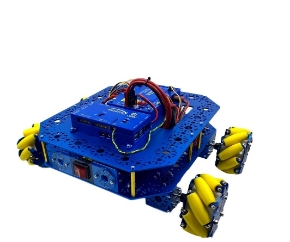
    For the Autonomous Mobile Robotics competition, the Shanghai 2026 collections provide the components Competitors need to build and configure their robots. The BASE Collection provides the components needed to build four base robot configurations: Differential Drive, Differential Drive All-Terrain, Mecanum, and X-Drive.

     Worldskills Autonomous Mobile Robotics Shanghai 2026 CollectionThe WorldSkills Autonomous Mobile Robotics Shanghai 2026 FULL Collection includes components for those four robots, plus additional parts for the robot OMS assemblies. The collection includes the VMX Robotics Controller, electronics, motors, servos, structural components, gears, sprockets, pulleys, belts, wheels, bearings, axles, brackets, fasteners, and other robotics hardware. In total, the collection offers more than 2,100 components.

    Together, these materials give Competitors the flexibility to build, test, and adapt their robots as they tackle the challenges of the Shanghai 2026 competition. Competitors can also create 3D-printed parts when additional components are needed.

    Unmanned Aerial Systems Makes Its WorldSkills Debut

    Unmanned Aerial Systems at WorldSkills Shanghai 2026For the first time, Unmanned Aerial Systems (UAS) will make its WorldSkills debut at Shanghai 2026. Commonly known as drones, UAS technology has moved far beyond hobby aircraft, with applications ranging from aerial surveying and infrastructure inspection to precision agriculture, firefighting, conservation, and public safety.

    At WorldSkills Shanghai, Competitors will bring together skills in aerodynamics, electronics, flight control, software, navigation, sensors, and communications as they work with unmanned aircraft and the technologies that make them fly, sense, and respond to their surroundings.

    The Technology Behind the UAS Skill

    Studica Robotics supports UAS education and skills development with the Studica WS500 UAV Quadcopter Kit, an open platform designed for hands-on learning with modern unmanned aerial systems.

    Studica WS500 UAV Quadcopter KitThe WS500 combines a carbon-fiber frame and motors with a CubePilot flight controller and Raspberry Pi 4B companion computer. Its sensor package includes an optical flow and distance sensor with a 6-axis IMU, a ToF 3D depth camera, and T-Mini Plus LiDAR. Together, these components provide a hands-on platform for exploring flight control, navigation, obstacle avoidance, sensor fusion, and autonomous systems, while ROS 2 support with MAVROS adds opportunities to work with robotics software and autonomy.

    The kit also includes the practical hardware needed to build and maintain the aircraft, including the power distribution system, propellers, landing gear, wiring, protective covers, and an installation and repair toolkit.

    Frequently Asked Questions

    When is WorldSkills Shanghai 2026?

    The 48th WorldSkills Competition will take place from September 22–27, 2026, in Shanghai, China.

    Where will WorldSkills Shanghai 2026 be held?

    WorldSkills Shanghai 2026 will be held in Shanghai, China.

    How many skills are represented at WorldSkills Shanghai 2026?

    WorldSkills Shanghai 2026 will feature 64 skill competitions across six skill sectors.

    What is Autonomous Mobile Robotics?

    Autonomous Mobile Robotics is a WorldSkills competition focused on designing, building, programming, testing, and maintaining mobile robots that can solve problems in real-world environments.

    What sector is Autonomous Mobile Robotics part of?

    Autonomous Mobile Robotics is part of the Manufacturing and Engineering Technology sector at WorldSkills Shanghai 2026.

    What is Unmanned Aerial Systems?

    Unmanned Aerial Systems, or UAS, refers to unmanned aircraft and the technologies used to operate them, commonly known as drones. The field involves technologies including aerodynamics, flight control systems, communications, robotics, software, sensors, navigation, and regulatory compliance.

    Is Unmanned Aerial Systems new to WorldSkills?

    Yes. Unmanned Aerial Systems is making its WorldSkills debut at Shanghai 2026.

    What is Studica Robotics' role in WorldSkills?

    Studica Robotics is a Global Partner of WorldSkills and the exclusive supplier for the WorldSkills Autonomous Mobile Robotics Competition. Studica also supports skills development in emerging technology fields including robotics and unmanned aerial systems.

    The Final Countdown to WorldSkills Shanghai 2026

    The countdown to WorldSkills Shanghai 2026 is almost over. In just a few weeks, Competitors from around the world will put their skills, preparation, and determination to the test on the global stage. For Autonomous Mobile Robotics Competitors, Shanghai is the culmination of years of preparation. For Unmanned Aerial Systems Competitors, Shanghai marks the beginning of a new chapter as the skill makes its WorldSkills debut. Studica Robotics offers WorldSkills Competition Kits for AMR and UAS and proudly supports both competitions. We are excited to be part of the journey to Shanghai.

    The countdown is on. We’ll see you in Shanghai!

    Related Articles:


    EV SSL